Son of SunBlock: Building a Variable Power PC Client for Playing Minecraft

This idea has been on deck since we started the SunBlock project last year. We knew that in terms of the gross carbon footprint of playing games like Minecraft, that the power consumption of game servers is dwarfed by the more graphics heavy processing of game clients. If we really want to think about less carbon intensive and energy efficient gaming, then we need to focus on PC client systems which use easily 5x as much power as the server on the low end.
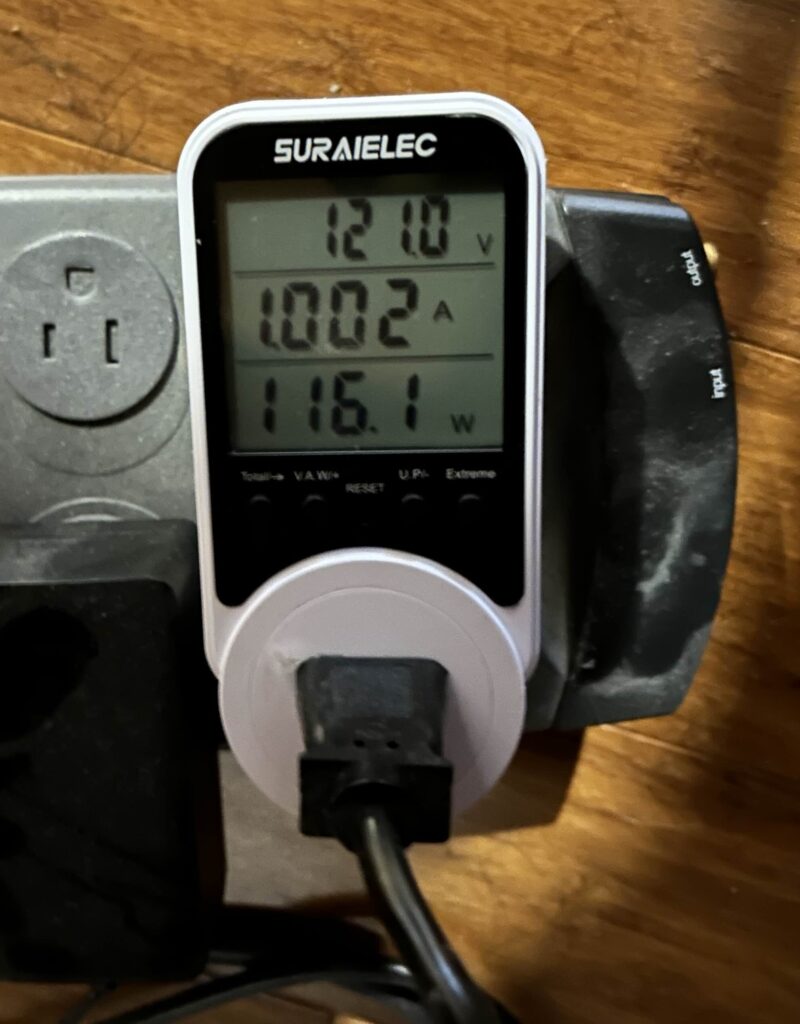
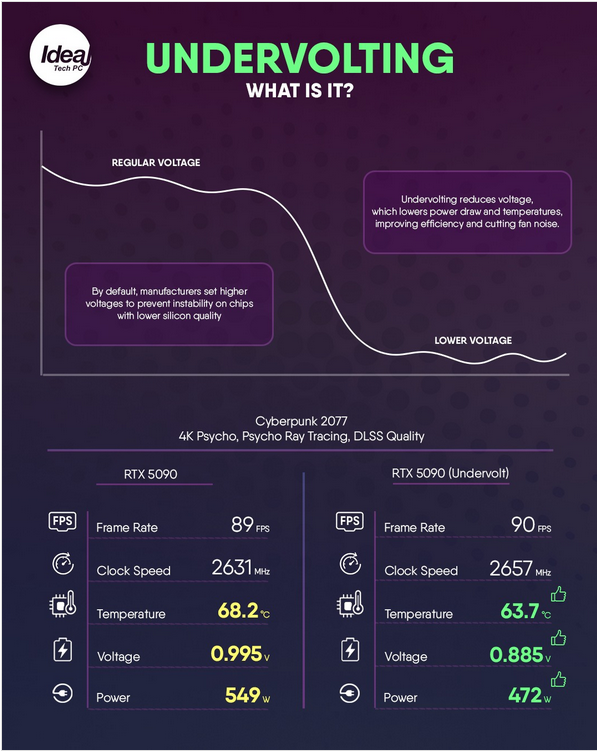
We built SunBlock specifically to work on our solar powered batteries ranging from 80 to 150Ah and the Odroid H3 system we are using seldom reaches 25-30W at maximum load. My own PC client at home (an i5 with RTX 4070ti GPU) runs modded Minecraft at around 110-150W with peaks at 250W+ and idles at around 60W it seems. In the same vein we need to consider that the carbon footprint for PCs is steadily increasing with CPU and GPU performance. The latest GPUs are rated at 600-700 Watts and one recent GPU seen at CES was rated at 1000 Watts! This tendency is in direct opposition to the game console and single-board (miniPC) market where energy efficiency has been increasing with performance.
As with SunBlock what we want is a client system that can facilitate players’ reflexive practice with respect to the energy infrastructures and carbon footprint of their own gaming habits, and of digital culture in general. We firmly believe that game culture remains an important pivot point for rethinking, reimagining and remaking our relationship to the planet but our focus is on maximizing the agency of players by extending the boundaries of gameplay to include the energy infrastructures that make their games possible. We don’t want black boxed energy efficiency so much as more participatory energy-reflexive computer system design. Sustainability should be enacted by players not merely consumed as a greener appliance. In this sense, we are exploring the possibility of a different kind of gamer-subject less bent on the consumption and expression of power and more attuned to the material-cultural contexts of their play. In this we feel there are deeper, richer pleasures of play still to be found.
This motivation is what drives our latest project. Son of SunBlock (SoSB) will be a custom-built PC in a Micro-ATX form factor. Over the last three weeks, our SoSB team (Bart Simon, Nadia Abdul Aziz and Alexandre Godfroy) have been hard at work researching components racing against RAM price hikes to spec a system that meets a few different criteria. I will lay out the main criteria now in summary, and will be expanded on by the team in future entries.
Customizable Power Draw to Make Power Playable
Our system needs to be as energy efficient as possible while still allowing for maximum variation in power draw. That means a CPU, GPU and even RAM that are overclockable and under-voltable with the widest possible range. So for instance, an AMD Ryzen 7 9700X is more interesting for us than the better performing 9800X3D not just because of the price but because the upper and lower clock range is greater, and this along with GPU clock range will give us the widest controllable power draw beyond factory presets.
This controllable power draw matters because, as with SunBlock, we will be measuring the total power consumption of the system and sending that data to our custom mod for use in-game. This allows us to make game experiences that depend not only on the data from the solar-powered server, but also from the player’s own client. What we need is for the player to have some genuine choices to make in terms of what power profile they choose to play with. Sometimes the lowest possible power draw will be necessary and other times not. Of course, the more clients we can monitor for energy data, the more interesting multiplayer games will become…Son of SunBlock will be our demonstration machine!
Drawing Attention as We Draw Power
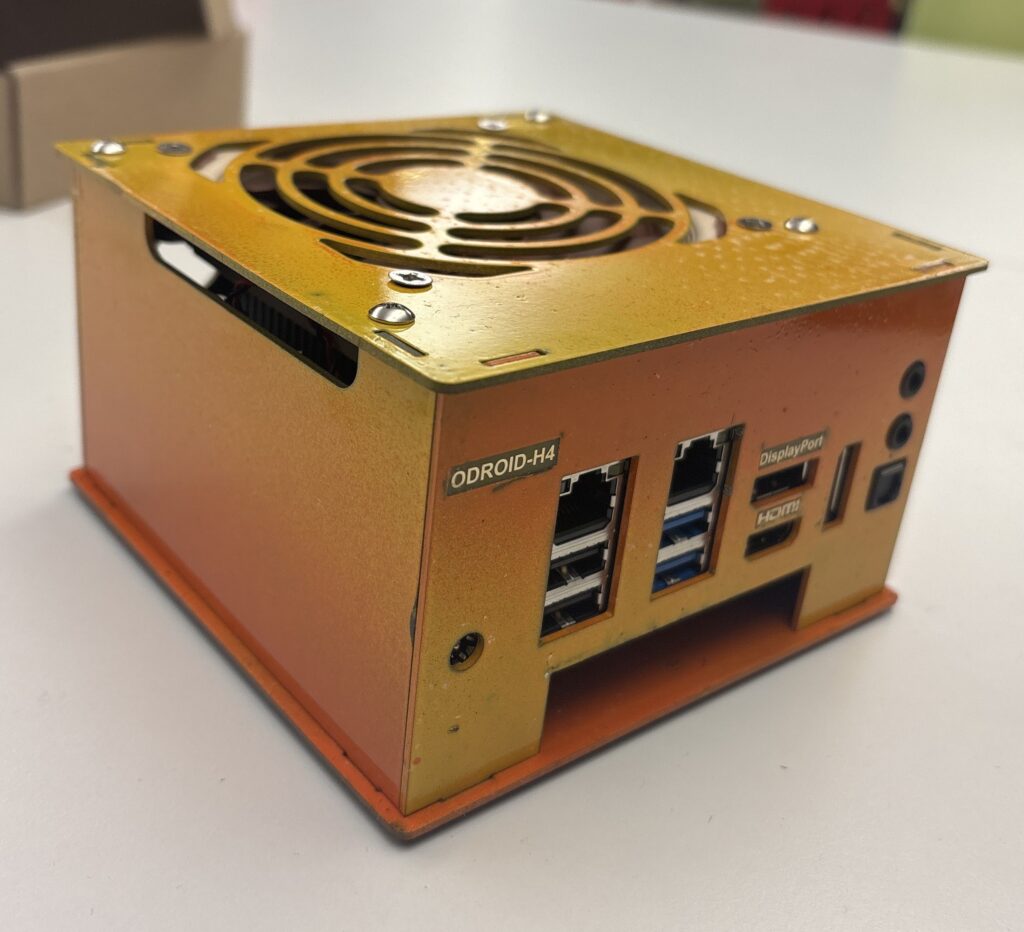
We realized quickly that our SunBlock server wasn’t much to look at. It’s pretty small and innocuous even after I spray painted it with a nice orange-yellow gradient. That makes it hard to compete with the ostentatious systems gamers are so fond of…the equivalent of muscle cars for computers. What we want then is a build that can compete for attention but demonstrate an inverse relationship to power consumption. In a sense, we want a machine that can compete with the best but doesn’t have to and we want a design aesthetic that showcases both our concern for reflexivity about energy, as well as playability. I will admit I have a fondness for PC building as I have written about this practice in the past especially in regard to LAN parties. I think with PC building there is already a sensitivity to the materialities of gaming and given the prevalence of under-volting for many high builds I think there are already cultural threads to work with that are not available if we simply bought an energy efficient single board miniPC.
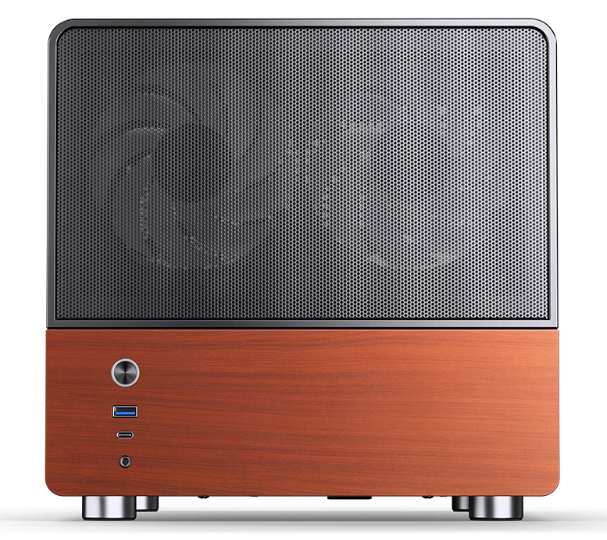
Son of SunBlock needs to look the part! In addition, as we expand our game design to include custom Minecraft mini-games and other kinds of game experiences we want our system to be both portable and configurable for use at home, in the lab or at festivals and conferences where we may demonstrate our research. This is the justification for the Micro-ATX form factor as well as putting a little more pressure on ourselves to think about fan cooling and its role in the energy calculus of the system. Micro-ATX presents different challenges for efficient cooling than normal ATX systems and aside from this we have a few other tricks up our sleeve we are eager to test out.
Thinking Ahead
This last criterion is standard advice… game culture is an ever-progressing dance between hardware capability and software performance. Unlike others working in ecocritical game studies and design we are not making our own low power or low carbon games. Instead, we want to intervene on the games most people play and that is one of the reasons we work with Minecraft. Yet modded Minecraft especially, as a community driven, messy and inefficient practice, demands more and more performance from computers as modders develop more and more complex and large modpacks (chewing up RAM and CPU performance) and more spectacular visual effects with shaders (demanding better GPU performance). We want a machine that can play with all this even if most of it is unnecessary.
We can certainly build a computer with less performant components and use that to play modded Minecraft but while we are at it and while we can we’d better build a machine that will last into the foreseeable future. This is not a particularly good model for sustainable computing in gaming however because the entire culture revolves on always being ready to upgrade systems and demand more from software in the pursuit of new (and lucrative) game experiences. Breaking this cycle by fostering low carbon game culture is very important development but our project takes another route by asking if we are going to make these essentially power hungry digital games can we at least do it differently.